
What was PizzaNet?
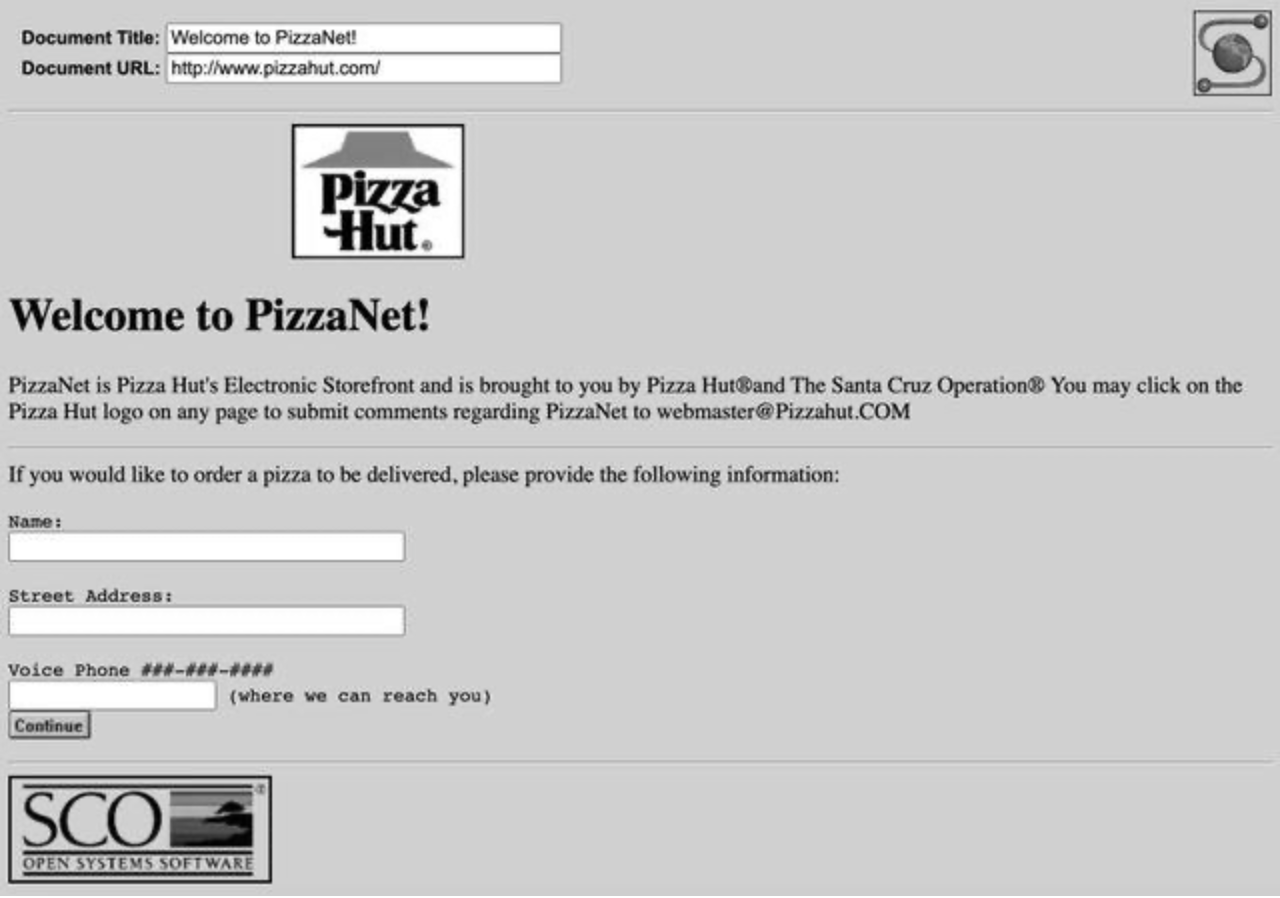
PizzaNet was Pizza Hut's online ordering experiment from 1994, and honestly, it was one of those ideas that felt almost too ahead of its time. When people talk about the "first things ever done on the internet," they usually mention email or early chat rooms. But ordering a pizza online? No one really thinks about it. Yet Pizza Hut actually did it. They launched a website in partnership with a software company called the Santa Cruz Operation (SCO), and they let people in Santa Cruz order pizza through a simple form on the web. That might seem totally normal now, like of course everyone orders food online, but back then, most people were still learning how to connect to the internet at all. Dial-up tones, slow loading times, and extremely basic websites were the norm. If you went onto PizzaNet in 1994, you wouldn't see the kind of colorful food pictures we're used to now. The site was basically just text. You'd choose your pizza, type in your information, and hit submit. Inside the Pizza Hut store, your order would print out on a machine, and the employees treated it like any other order. If you had all three of these you could use PizzaNet: "who had computers, access to the Internet, and a Mosaic interface program" (mminter6, 2021). You couldn't pay online so you still had to pay in cash, and the order would be received by Pizza Hut headquarters to confirm the order. Even though it was limited, PizzaNet became one of the earliest examples of online food ordering (The History of the Web, 2020). PizzaNet feels important because it shows how early the idea of online food ordering appeared. It was one of the first moments when the internet wasn't just something you read or browsed. It was something you could use to get something real, like dinner. Most people didn't realize it at the time, but this was the beginning of a huge shift in everyday life.
First PizzaNet interface
1990s Atmosphere
The internet of the 1990s was a mix of excitement, confusion, and fear. People were fascinated by the possibilities of this new reality but unsure how to navigate it safely. News stories frequently warned about hackers and identity theft, and movies like The Net (1995) captured the anxiety people felt about putting personal information online. In one scene, Angela Bennett, the main character, orders a pizza through a fictional website called Pizza.net. She clicks through a simple, interactive form to select her toppings: anchovies, garlic, extra cheese, and submits the order. It shows Angela’s social isolation and her preference for technology over real-world interaction. The filmmakers made the pizza order a symbol of her life. She is more comfortable communicating through a computer than with people. At the time, people didn’t understand it, but now it’s an intense issue we are facing. This moment perfectly illustrates the endless possibilities of the 90s internet. It was a world where new technology promised convenience and connection, but users were cautious and curious at the same time. Ordering pizza online, whether in real life with PizzaNet or in the movie, represented the first steps toward everyday digital life. People were testing the limits of what the web could do, experimenting with interfaces, and imagining a future where the internet was part of daily routines (Los Angeles Times, 1994; The History of the Web, 2020). At the same time, businesses were experimenting. Everyone wanted to be part of the web early, even if they didn’t fully understand it. The internet felt like a wide-open space for trying new things, testing ideas, and seeing what might stick. PizzaNet came out right in this moment, when the internet was exciting but also unpredictable. Reactions to online ordering were mixed. Some people were intrigued by the convenience, while others couldn’t imagine trusting a computer with personal information. The Los Angeles Times (1994) described online pizza ordering as “a clever but uncertain experiment,” which shows that even journalists weren’t sure whether the internet would become part of daily life. Understanding the 1990s internet helps explain why PizzaNet was so important. It wasn’t just about ordering pizza it was a way to test how businesses and consumers could interact online in a world that was still learning the rules of digital trust and technology.
How PizzaNet Worked
PizzaNet was a milestone because of how much behind-the-scenes work was required to make something so simple actually function. Most people think of the early web as a bunch of text pages, but companies like the Santa Cruz Operation (SCO) were building the server technology that made projects like PizzaNet possible (Isenberg, 2016). In 1994, the web was still very fragile and there was no blueprint tp base a website like this off of. There were no standards for online commerce, no patterns for how a food website should work, and no safe way to process payments or store customer information. SCO was one of the few companies trying to create a real fod commercial environment for the internet (Isenberg, 2016). SCOs role in PizzaNet was bigger than just helping Pizza Hut make a webpage. They were already experimenting with tools that combined a web server, networking software, and the Mosaic browser into something businesses could use. Their product, SCO Global Access, bundled Mosaic and made the idea of an internet server real. It gave Pizza Hut a stable platform to run a form allowing customers to type in their information, and send that information across the internet to a physical store (Isenberg, 2016). That is not groundbreaking now, but at the time, it proved that a browser could do more than show text. It could send real data from a customer to a company in a useful way. SCO also shaped the experiment by providing Pizza Hut with a controlled, local test environment. Santa Cruz was chosen because of the SCO engineers that were available there and could watch what actually happened when regular people tried to order online. SCO employees remember watching orders come in and learning how users navigated forms, how they typed their information, and what confused them. This kind of live user data was rare at the time and helped both SCO and Pizza Hut understand how ordinary people behaved in a digital space before the user experience was even a concept (Isenberg, 2016). This experiment changed how companies viewed the internet. Instead of treating the web like a novelty or a place for reading information, PizzaNet showed that the internet could support commercial activity. It also demonstrated that everyday users were willing to interact with businesses through a screen, even if the interface was simple and slow, though that was normal at the time. Their collaboration helped push the internet toward what it would eventually become. As reported years later, Pizza Huts early online ordering experiments helped lead to scheduled orders in 2003 and app-based tracking in 2009. In a way, SCO helped show the world what an interactive web could look like long before anyone imagined things like Uber Eats and DoorDash (Isenberg, 2016).